How Long Does It Take for a Fridge to Get Cold? (Complete Guide)
Imagine coming home with a brand-new, sleek French-door refrigerator or finally setting up that mini-fridge for your game room. You plug it in, hear the reassuring hum of the compressor, and immediately want to load it up with your groceries and drinks.
But here is the most common misconception: a refrigerator is not ready to store food instantly just because it’s plugged in. Understanding exactly how long it takes for a fridge to get cold isn’t just about enjoying a crisp soda; it’s a matter of food safety and appliance longevity. Loading your fridge too soon can trap warmth inside, forcing the compressor to work overtime and potentially spoiling your perishables.
In this comprehensive guide, we will break down the timelines, the science behind the chill, and how you can get your fridge up to temperature safely and efficiently.
How Long Does a New Fridge Take to Get Cold?
As a general rule of thumb, it takes anywhere from 2 to 24 hours for a refrigerator to reach safe, stable temperatures. However, because a fridge relies on a closed-loop refrigeration cycle to remove heat rather than just “inject” cold air, different compartments cool at different rates:
- Refrigerator Compartment (~4–12 Hours): The main fresh food compartment usually drops to a safe temperature within 4 to 12 hours, depending heavily on the brand and size.
- Freezer Compartment (~12–24 Hours): Because the freezer needs to drop well below the freezing point of water, it takes significantly longer—often a full day—to stabilize completely and begin producing ice.
This is precisely why appliance manufacturers universally recommend waiting before storing your groceries. If you stock the shelves too early, the ambient heat from room-temperature food will fight against the cooling cycle, drastically extending this timeline.
First-Time Setup vs. Rebooted Fridge
The history of the appliance also dictates how fast it drops in temperature:
- New Fridge: Brand new units are starting entirely from scratch. Every internal plastic panel, glass shelf, and insulation layer is at room temperature (or hotter, if it was sitting in a delivery truck). It takes a massive amount of thermal energy removal to cool down these raw materials.
- Relocated/Rebooted Fridge: If you just unplugged your fridge to clean it or moved it across the room, it may cool down slightly faster because the core components aren’t totally warm. However, if a fridge was transported on its side, you must let it sit upright for 2 to 4 hours before plugging it in to allow the compressor oil to settle. Skipping this can permanently damage the cooling system.
Empty vs. Loaded Conditions: An empty fridge actually cools its air faster, but that air easily escapes the moment you open the door. A properly loaded fridge retains its cold much better because solid items hold “thermal mass” (thermal inertia). However, during the initial startup phase, starting empty is preferred so the appliance doesn’t have to cool food and its own structure simultaneously.
Ideal Temperature for a Refrigerator and Freezer
To know when your fridge is ready, you need to know what target numbers you are looking for.
Recommended Safe Temperatures
According to food safety standards, your appliance should be calibrated to the following settings:
- Refrigerator: 37°F (3°C) — Keeping it between 35°F and 38°F is the sweet spot. Anything above 40°F is a hazard.
- Freezer: 0°F (-18°C) — Solidly frozen to preserve food texture and prevent bacterial activity entirely.
Why Temperature Stability Matters
The “Danger Zone” for food is between 40°F and 140°F. In this window, harmful bacteria can double in number in as little as 20 minutes. If your fridge fluctuates or takes too long to drop below 40°F, you risk early food spoilage and foodborne illness. Furthermore, a stable temperature ensures optimal energy efficiency; when the interior remains consistent, the compressor cycles on and off naturally rather than running continuously, saving you money on your electricity bill.
Factors That Affect How Fast a Fridge Gets Cold
Not all refrigerators are built the same, and environmental factors play a massive role in how quickly yours will achieve optimum chill.
1. Fridge Size and Type
- Mini Fridges: Because they have very little interior volume, a compact mini-fridge can often reach a safe temperature in just 2 to 4 hours.
- Full-Size / French Door Models: Large residential units feature complex dual-evaporator systems, ice makers, and vast interior spaces. Expect these to take 12 to 24 hours to fully stabilize.
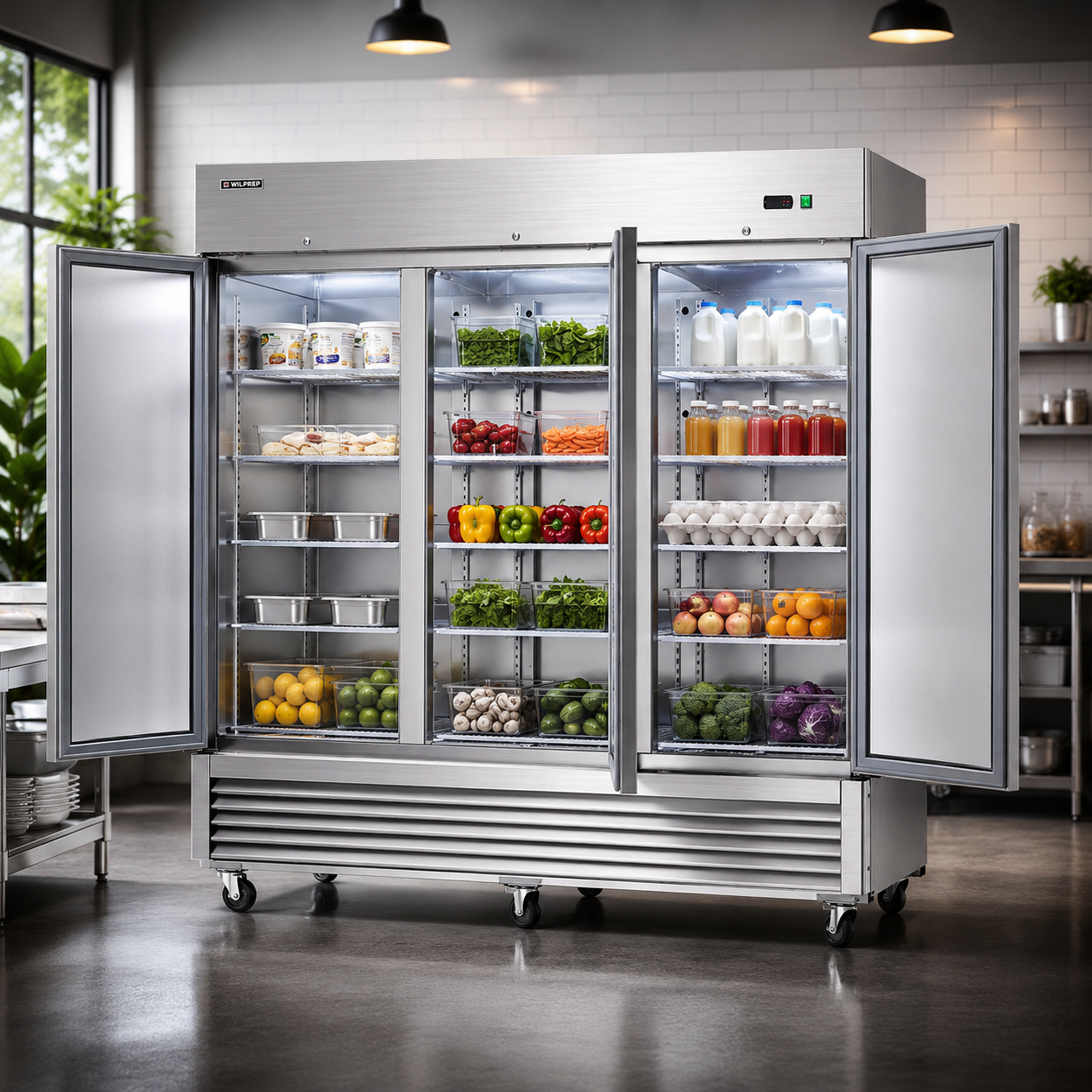
- Commercial Units: Built with heavy-duty compressors and powerful fans, commercial fridges can pull down temperatures incredibly fast (often under 2 to 3 hours), though they consume much more power to do so.
2. Room Temperature and Environment
Where you place the fridge matters. If you set up a new refrigerator in a hot garage, a sunlit porch, or right next to a blazing kitchen oven, the cooling process will slow to a crawl. The fridge dispels heat from its back or bottom coils; if the surrounding air is already hot, it cannot dump that heat efficiently. Proper ventilation—leaving a 1-to-2-inch gap around the sides and back—is crucial.
3. Load Inside the Fridge
As mentioned, an empty fridge drops its air temperature rapidly. However, if you pack a warm fridge full of room-temperature soda cans, meat, and vegetables all at once, those items act like tiny heaters. They radiate warmth into the cabinet, forcing the fridge to work twice as hard and delaying the cooling process by hours.
4. Thermostat Settings
When you first plug a fridge in, it’s tempting to crank the thermostat down to its max-cold setting to “speed things up.” However, most modern refrigerators use digital thermostats that tell the compressor to run at full speed regardless of whether your target is 37°F or 33°F. It’s best to set the fridge directly to its factory-recommended default setting from day one to avoid over-freezing the system.
How to Make Your Fridge Cool Faster
While you can’t bypass the laws of thermodynamics, you can give your refrigerator a helping hand with these smart setup strategies.
Smart Setup Tips
- Leave Space for Airflow: Ensure the interior air vents (usually located at the back of the shelves) are completely unobstructed. Good circulation is the secret to fast cooling.
- Keep Doors Closed: Every time you open the door to check if it’s cold yet, you let out the heavy, chilled air and pull in warm, humid room air. Be patient and leave it sealed.
Pre-Cooling Hacks
- The Cold Water Container Trick: Place a few large jugs or bowls of ice water into the fridge compartment after the first hour. The water will help absorb ambient heat and introduce cold thermal mass, helping stabilize the air temperature faster.
- Pre-Chill Food: If you must transfer food from an old fridge to a new one, store the food in ice chests/coolers while you wait for the new unit to drop in temperature. Never put hot, freshly cooked leftovers straight into a cooling fridge.
Avoid These Mistakes
- Don’t overfill it too soon. Introduce food gradually over 24 hours.
- Don’t block the exterior base grilles or rear panels, which suffocates the compressor.
Signs Your Fridge Is Not Cooling Properly
Sometimes, a delay isn’t just a matter of patience—it could point to a mechanical issue.
Warning Indicators
If you notice any of these signs after 6 to 8 hours, your fridge might be struggling:
- The interior air still feels completely ambient or lukewarm.
- The compressor (the low humming motor at the back) is extremely loud, clicking constantly, or not making any sound at all.
- No airflow is coming from the internal freezer vents.
Possible Causes
Before calling a technician, check the basics:
- Poor Door Seal: Check if the magnetic rubber gaskets are making full contact with the frame. A gap as small as a dime can leak out all the cold air.
- Thermostat Glitch: Ensure the control lock isn’t on and that the unit isn’t accidentally set to “Demo” or “Showroom” mode (a common issue with store displays).
- Overloaded System: If you packed it full immediately, give it an extra 12 hours before panicking.
How Long Should You Wait Before Storing Food?
To ensure your food remains perfectly safe, follow this standard best-practice timeline checklist:
| Time Elapsed | Action Plan |
| 0 to 2 Hours | Leave the fridge completely empty. Keep doors tightly closed. |
| 2 to 4 Hours | Safe to stock non-perishables (sodas, water bottles, condiments). This adds helpful thermal mass. |
| 4 to 12 Hours | Check the temperature with a standalone appliance thermometer. If it reads under 40°F, you can begin adding fruits, vegetables, and cheeses. |
| 12 to 24 Hours | The freezer should now be thoroughly chilled. Safe to load highly perishable items (raw meats, milk, eggs, and frozen goods). |
FAQs
Can I put food in a new fridge right away?
It is highly discouraged. Putting food in right away traps room-temperature heat inside, which can cause perishables to spoil before the fridge ever manages to drop below the 40°F danger zone.
Does a commercial refrigerator cool down faster than a residential one?
Yes, significantly faster. Commercial refrigerators utilize powerful, heavy-duty compressors and industrial-grade fans designed for high-frequency use. While a standard home fridge takes 4 to 12 hours to reach a safe temperature, a commercial size refrigerator can often hit the target 37°F (3°C) mark within 1 to 3 hours from a warm start. However, they are much louder and emit more ambient heat into the room during this process.
Why is my fridge taking so long to get cold?
It could be due to a lack of proper ventilation around the exterior coils, a high ambient room temperature, or because the doors are being opened too frequently. Large French-door models naturally take up to 24 hours to stabilize completely.
Does a full fridge cool faster than an empty one?
Initially, an empty fridge cools its internal air faster. However, once a fridge is cold, a full fridge (about 75% capacity) maintains its temperature much better than an empty one because the items retain the cold, preventing temperature spikes when the door opens.
Should the fridge be empty during cooling?
Yes, it is best to keep it empty for at least the first 2 to 4 hours so the internal components can cool down efficiently without any thermal interference from food.
How do I know when my fridge is ready?
Don’t rely on your hand to judge the temperature. The most accurate way is to place a cheap, analog appliance thermometer on the middle shelf. Once it consistently reads 37°F (3°C) in the fridge and 0°F (-18°C) in the freezer, your appliance is officially ready.
Conclusion
The key takeaway is that patience pays off: most standard residential refrigerators require 4 to 12 hours for the fridge compartment to become safe, and a full 24 hours for the entire system to stabilize. Proper setup directly influences your appliance’s lifespan, your energy bills, and your family’s health. Resist the urge to rush the process, always verify the temperature with a thermometer before loading up on perishables, and you’ll enjoy fresh, safely preserved food for years to come!