Restaurant Upgrades That Improve Guest Experience
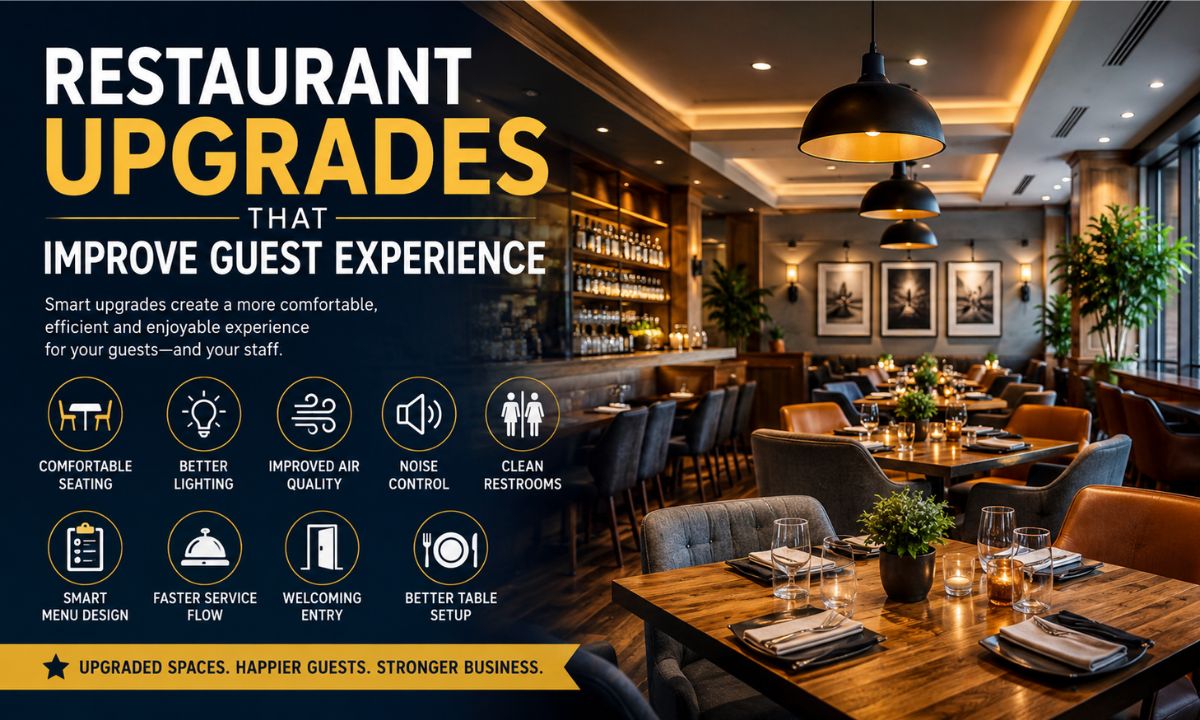
A restaurant’s guest experience depends on more than food quality. Guests notice the seating, lighting, air comfort, table setup, noise level, cleanliness, service flow, signage, and the small details that make the meal feel organized.
Good upgrades do not always require a full renovation. Many of the most effective changes come from improving daily touchpoints that guests interact with directly.
The goal is to make the space easier to enjoy, easier to navigate, and easier for staff to manage during busy service.
Improve the Table Setup
The table is where guests spend most of their visit. A clean, stable, well-designed table setup can make the meal feel more polished before the food arrives.
Restaurants should review the quality of menus, napkins, glassware, flatware, condiment placement, table spacing, and surface protection.
Small tabletop details can also support branding. For example, customized coasters can protect surfaces, reinforce the restaurant’s identity, and make drink service feel more intentional.
Table items should never feel cluttered.
Each piece should have a purpose.
A crowded table can make guests uncomfortable, especially when plates, drinks, shared dishes, and phones compete for space.
Upgrade Lighting by Zone
Lighting affects mood, food presentation, photography, and comfort. A restaurant should not use the same lighting intensity across every area.
Dining tables usually need warm, flattering light.
Prep counters, service stations, kitchens, and payment areas need brighter task lighting.
Entryways and restrooms should feel clean and easy to navigate.
If guests struggle to read menus, lighting may be too dim.
If food looks flat or harsh, the lighting may be too cold or uneven.
Use dimmers where possible.
This allows the restaurant to adjust between lunch, dinner, events, and late-night service.
Make Seating More Comfortable
Uncomfortable seating can shorten visits and reduce repeat business. Chairs, booths, bar stools, and benches should be reviewed for comfort, stability, spacing, and accessibility.
A chair can look good but still fail if the seat height, back support, or cushion firmness is wrong.
Restaurants should test seating during real service conditions.
Can guests move their chairs without hitting another table?
Can servers pass comfortably?
Can older guests sit and stand easily?
Seating Details to Check
Important details include:
- Seat height
- Cushion support
- Back angle
- Table clearance
- Aisle spacing
- Stability
- Ease of cleaning
- Durability
- Noise when moved
Comfort matters most when guests are dining for more than a quick meal.
Improve Air Quality and Ventilation
Air comfort shapes how long guests want to stay. A restaurant with lingering food odors, smoke, humidity, grease, or stale air can feel unpleasant even if the design looks attractive.
Ventilation should be reviewed in the dining room, kitchen, restrooms, storage areas, and waiting spaces.
Restaurants with heavy cooking output, high occupancy, or persistent air concerns may benefit from stronger solutions such as air filtration systems to help manage airborne particles and improve indoor conditions.
Air quality should be paired with regular HVAC service, hood cleaning, filter replacement, and kitchen maintenance.
A clean air strategy supports both guests and staff.
Restaurants should also follow workplace safety and ventilation recommendations provided by the Occupational Safety and Health Administration to help maintain a safer environment for both employees and guests. A clean air strategy supports both guests and staff.
Reduce Noise Problems
Noise can damage the dining experience. Guests may enjoy a lively room, but they do not want to shout across the table.
Hard floors, exposed ceilings, metal chairs, open kitchens, and crowded dining rooms can all increase noise.
Restaurants can reduce sound issues with acoustic panels, upholstered seating, curtains, rugs where appropriate, ceiling treatments, and better speaker placement.
Music volume should be adjusted by time of day and guest type.
A brunch crowd may need a different sound level than a late-night bar crowd.
Noise control helps conversations feel easier and makes the room more comfortable.
Simplify the Entry Experience
The first few minutes shape the guest’s impression. Entry areas should be clear, welcoming, and easy to understand.
Guests should know where to check in, where to wait, and whether they should seat themselves.
If the host stand is hidden or crowded, confusion starts immediately.
Clear signage, good lighting, visible staff, and a clean waiting area can make the arrival smoother.
For busy restaurants, reservation systems and text alerts can reduce crowding near the door.
The entrance should also stay clean during peak hours.
A messy entry can make guests question the rest of the operation.
Improve Restrooms
Restrooms are a direct reflection of restaurant standards. Guests may forgive a wait for food, but a poorly maintained restroom can damage trust quickly.
Restrooms should be clean, stocked, well-lit, ventilated, and easy to inspect during service.
Fixtures should work properly.
Doors should lock.
Trash should not overflow.
Restroom Checks to Schedule
Review these items often:
- Soap supply
- Paper products
- Hand dryers
- Trash levels
- Odor control
- Floor condition
- Sink function
- Door locks
- Lighting
Assign restroom checks during every shift.
Do not wait for guests to report problems.
Improve Menu Design
Menu design affects ordering speed and guest confidence. A confusing menu creates more questions, slower decisions, and more service interruptions.
Menus should be easy to read, logically organized, and updated when items change.
Use clear section headings, accurate descriptions, allergy notes, and pricing that is easy to scan.
Avoid overcrowding the page with too many fonts or long explanations.
Digital menus should load quickly and work well on mobile devices.
Printed menus should be clean and replaced when worn.
Support Faster Service Flow
Guest experience improves when staff can move efficiently. Service stations should be stocked, organized, and placed where they reduce unnecessary walking.
Common delays happen when servers search for utensils, glassware, napkins, check presenters, condiments, or cleaning supplies.
Map the service path during a busy shift.
Look for repeated bottlenecks.
A small adjustment in station layout can reduce steps, improve table turns, and lower staff stress.
Better workflow usually leads to better guest attention.
Final Thoughts
Restaurant upgrades should make the guest experience smoother, cleaner, more comfortable, and more memorable.
Start with the areas guests notice most: tables, lighting, seating, air quality, noise, entry flow, restrooms, menus, and service movement.
The best improvements are practical.
They help guests relax, help staff work better, and help the restaurant feel more professional without relying on unnecessary decoration.