
The Best Bathroom Tiles for Small Spaces Tricks to Make Any Room Feel Bigger
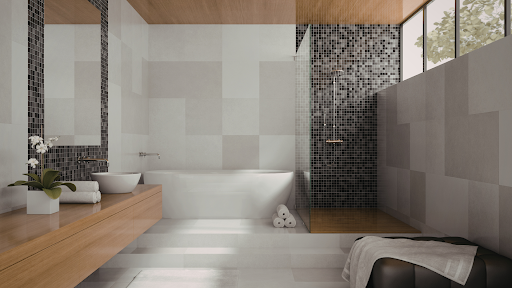
Here’s something most people get completely wrong about small bathrooms: they assume the problem is size. It’s not. The real culprit is visual chaos, too many grout lines breaking up the surface, harsh contrasts pulling your eye in every direction, and finishes that swallow light instead of throwing it back. The walls aren’t the issue. The tiles are.
But knowing which tile to buy is only part of it. Understanding how size, finish, grout color, and layout interact is what separates a bathroom that feels like a closet from one that feels like a retreat. That’s exactly what we’re going to walk through: no filler, no vague inspiration boards, and no advice that ignores how tile actually gets installed in the real world.
Space-Expanding Tile Principles (The Optical Illusions That Work Every Time)
Every single tile decision you make either adds a visual interruption or removes one. In a small bathroom, your goal is ruthlessly simple: fewer breaks, cleaner lines, surfaces that cooperate with light rather than fighting it.
Visual Continuity Beats “Tiny Tile for Tiny Room”
Let’s kill this myth immediately. Small rooms do not need small tiles. In fact, the opposite is usually true. Fewer grout lines equal fewer interruptions and fewer ruptures, making a space read as calmer, more open, and surprisingly larger. Focus on keeping the biggest visible surfaces, the floor and the main wet wall, as unbroken as possible. You’ll feel the difference almost immediately.
Grout Strategy That Makes Tiles to Make BathroLook Bigger
Match your grout to your tile. Full stop. Designers call it the “blurred edge” effect when grout appears in the tile color, the grid becomes nearly invisible and the room reads as one continuous plane. Tiles to make the bathroom look bigger lean heavily on this principle. Contrasting grout can work, but treat it as a deliberate directional tool on exactly one surface, not a pattern repeated everywhere.
Even the perfect tile can visually compress a bathroom if the grout is working against it. That’s the detail most people overlook until it’s too late to change anything without starting over.
Reflectivity and Light-Bounce Finishes for Small Bathrooms
Gloss finishes actively reflect the light they reflect on walls. Matte finishes absorb it, feel grounded, and reduce slip risk on wet floors. Satin splits the difference gracefully. When planning your layout, take a moment to map where light enters the room first, then position your highest-reflectance tiles directly opposite that source. You’re essentially engineering a light bounce, and it works remarkably well.
Directional Layouts That Stretch Walls and Floors
Vertical tile stacking lifts a low ceiling. Horizontal running bond widens a narrow room. Diagonal layouts pull the eye corner-to-corner and make a floor feel larger than it is. The common thread across all of these? Long, continuous lines that keep the eye moving across the room rather than stopping it short.
Best Bathroom Tiles for Small Spaces (Smart Picks by Tile Type and Finish)
Now that the optical logic is clear, let’s apply it to actual materials with honest tests on pros, cons, and where each tile type performs best.
Large-Format Porcelain as Space-Saving Bathroom Tiles
Formats like 12×24, 24×24, and 24×48 dramatically cut grout line frequency. Space-saving bathroom tiles in large-format porcelain pay off most when wrapped continuously from the floor up into the shower wall. Watch for two things: substrate flatness (lippage is unforgiving at large scale) and cuts around drains or niches, which require more precision than smaller formats.
Rectified-Edge Tiles for Tighter Lines and a Cleaner Grid
Rectified tiles are precision-cut to exact tolerances, making grout joints as tight as 1/16″ entirely achievable. That tightness de-clutters the visual grid; it becomes a subtle background texture rather than a dominant geometric pattern. Stay within your installer’s practical comfort range to avoid lippage, but push for the tightest joint you can reasonably achieve.
Light-Toned Stone-Look and Concrete-Look Tiles
Think pale travertine, soft limestone, warm greige microcement surfaces with gentle movement rather than bold drama. Heavy veining and strong patterns introduce visual noise that actively makes a small space feel smaller. Fine, low-contrast surface texture creates the spa-like calm you’re after without crowding the eye.
Gloss and Semi-Gloss Tiles That Brighten Small Bathrooms
Gloss on walls, not floors. On walls, it bounces light around the room without any glare risk. On wet floors, it becomes a genuine slip hazard. The classic pairing of glossy walls with a matte floor creates warmth and depth without tipping into the cold, blinding effect that an all-gloss room produces. This combination works in almost every small bathroom scenario.
Kit-Kat and Finger Mosaics Used as Directional Texture
Elongated finger mosaics laid vertically add height without expanding the grout grid sideways. Keep the grout tone close to the tile color; a strong contrast in a small-format mosaic turns the whole surface into a visual grid that reads busier than intended. Use these selectively: a vanity splashback or a single shower accent strip, not every surface in the room.
Terrazzo That Adds Interest Without Shrinking the Room
Fine aggregate on a light base is the rule here. Bold, chunky aggregate overwhelms a compact room quickly. Place terrazzo on the floor and one feature plane and genuine, stop there. It adds personality without the visual weight of a patterned wall multiplied across the entire space.
Bathroom Tile Ideas for Small Bathrooms (Layouts That Make the Room Feel Bigger)
Choosing the right tile is half the equation. How and where you place it determines whether those tiles actually deliver on the “bigger” promise.
Same Tile on Floor and Shower Wall for a “One-Box” Effect
Wrapping the same tile across the floor and the shower wall creates a seamless envelope of the room area, as one cohesive volume rather than a collection of separate surfaces. Align grout lines across the transition to reinforce continuity. A subtle finish shift matte on the floor, satin on the wall, adds just enough depth to keep the look from feeling flat.
Tile Taken to the Ceiling
Tiling all the way to the ceiling removes the visual stop that a paint line or crown molding creates. It’s one of the most reliable height tricks available, especially effective in the shower zone and behind the vanity. Use minimal trim profiles at the junction thick edge d; ails interrupt the vertical line and cancel the effect entirely.
Vertical Stacked Subway for Clean Height
Classic offset subway runs horizontally, which is ironic, but it can feel busy in a very narrow room. Stack that same tile vertically with no offset and you get c, lean, uninterrupted vertical lines that lift the eye upward and modernize the look simultaneously.
Diagonal Floor Layouts That Expand Perceived Square Footage
A 45-degree diagonal uses the longest tile dimension to cross the room corner-to-corner, making the floor appear wider than it is. It requires more cuts and generates more waste, so reserve it for spaces where the visual payoff genuinely justifies the added material and labor cost.
Herringbone as a Single Accent Plane
Herringbone on a shower’s back wall draws the eye deeper into the space, creating a sense of depth without overwhelming the room. Keep everything surrounding it, the floor, the walls, the vanity area, and all,d low-contrast. That contrast between the active pattern and the quiet surround is exactly what makes herringbone read as intentional rather than chaotic.
Stripe and Linear Patterns to Lengthen a Short Room
Elongated plank tiles or rectangular formats laid in a consistent direction guide the eye toward the room’s focal point. Align the stripe direction to whichever dimension needs stretching toward the shorter wall to lengthen, across the width to widen. Simple, but consistently effective.
Small Bathroom Flooring Options (Slip-Safe, Easy-Clean, Still Makes It Look Bigger)
Before committing to a floor plan, the flooring choice itself needs to clear three real-world hurdles: traction, cleaning ease, and visual continuity. According to the NKBA’s 2026 Bath Trends Report, 91% of professionals agree that durability and practicality to minimize upkeep is the top consideration for choosing a flooring material, with 80% expecting large-format flooring to be the most popular over the next three years. That’s not just a style forecast it’s a functional endorsement of fewer grout lines and lower maintenance.
Matte Porcelain Floor Tile
The safest default for most small bathroom flooring options. When surface texture is specified correctly, matte porcelain delivers appropriate slip resistance, cleans without fuss, and in large-format with matching grout, reads as one unbroken surface. Minimal transitions from the doorway to the shower pan reinforce that continuous feel.
Small-Format Mosaics for Shower Floors
The shower floor genuinely demands smaller tiles; slope and transition requirements make it necessary. Keep the mosaic color as close as possible to your main field tile to minimize the visual “patch” where formats change and the eye suddenly notices the transition.
“One Threshold, Zero Breaks” Transition Plan
The goal is a floor that reads as continuous from the bathroom door all the way to the shower. Where transitions are unavoidable, choose low-profile metal strips in a tone that blends rather than contrasts. Every additional threshold line is one more visual break that quietly reduces the perceived room size.
Color and Grout Combos That Make Tiles to Make a Bathroom Look Bigger
Your flooring is locked in now; color palette and grout are where small bathroom transformations either crystallize or quietly fall apart.
Best Light Palettes for a Bigger Feel
Warm whites, soft greiges, and pale taupes outperform cold stark whites in tight spaces. Cold whites amplify shadows in corners, making them feel darker and closer. Pair warm-toned tile with warm-temperature lighting 2700K to 3000K and that “b, ed-in” feeling that purely cool palettes create tends to disappear almost entirely.
Monochrome Layering (Same Hue, Different Textures)
Combine a satin wall tile with a matte floor tile in the same color family. Add a subtle ribbed accent strip for tactile interest. Texture and finish variation replace color contrast as the design layer, keeping the room calm, dimensional, and remarkably easy to live with.
High-Contrast Done Right
If you’re drawn to something bolder, high contrast absolutely can work but the rule, s strict. One controlled surface only. Confine the drama to the shower back wall or the vanity zone, keep grout low-contrast within that same surface, and let everything else breathe quietly around it.
Placement Playbook (Exactly Where Each Tile Choice Works Best)
Shower Wall Tile Choices That Deepen the Room
Continuous tile with aligned grout lines on the back shower wall pulls the eye forward and creates perceived depth. Treat that back wall as a “depth plane.” Keep it cal.m, keep it continuous, and let it do the spatial work without distraction.
Vanity Wall Tile That Widens the Space
Mid-tone tile with low-contrast grout at the vanity zone handles splashes without introducing a busy pattern. Extending the tile beyond the physical edges of the vanity cabinet on both sides, even six inches wider on each side, visually expands the wall and makes the entire room feel broader.
Feature Wall Strategy That Won’t Shrink a Small Bathroom
In a small bathroom, a feature moment should come from a finish or texture shift, a ribbed surface, a subtly richer tone, a different format, not an entirely new color family. Align the feature wall with the direct sightline from the doorway so it reads as deliberate rather than accidental.
2026-Forward Innovative Tricks Most Guides Haven’t Caught Up To
“Micro-Seam” Look With Larger Panels
Large-format porcelain panels on key walls reduce seam frequency to near zero. The result is a surface that reads almost like a single solid plane an effect that’s increasingly practical as panel sizes and installation systems continue to improve.
Hidden-Drain Linear Floor Layouts
Position a linear drain at one wall, and tile can run in a single continuous direction across the entire floor without cuts around a center drain. The result is an unbroken floor plane that makes even a genuinely tiny bathroom feel considerably more expansive underfoot.
Color-Drenching With Tile
Wrapping floor, walls, and even the ceiling in the same tonal family creates what designers call a “color envelope.” It sounds like it should feel overwhelming, but it actually reads as calmer and larger than a room with competing colors on every surface. Let metal fixture finishes carry the contrast instead of additional tile patterns.
Low-Profile Trims and Minimal Edge Details
Even the cleanest tile scheme can be visually fragmented by bulky trim at corners, thresholds, and junctions. Mitered edges, thin metal profiles, and simplified corner details keep the tile surface reading as continuous rather than repeatedly interrupted.
Common Mistakes That Make Small Bathrooms Feel Smaller (Fixes Included)
Too Many Tile Changes
More than two tile types in a small bathroom almost always creates visual clutter. Enforce a “two-tile maximum”: the main tile, one optional accent. Match tones across planes and simplify transitions everywhere.
Busy Patterns and High-Contrast Grout Everywhere
Even a single beautiful tile can feel chaotic when high-contrast grout turns every joint into a visual event. Confine contrast to one intentional surface, and let the rest of the room stay quiet around it.
Wrong-Scale Statement Tile That Overwhelms
A statement tile that’s too bold for the room’s proportions overwhelms rather than excites. Scale it down micro-terraz, subtle ribbing, fine texture, or isolate it to one controlled surface where it can read properly without competing for attention.
Skipping a Layout Mockup
Dry-lay tiles on the floor. Tape outlines on the wall. Check how the focal lines read from the doorway. It takes roughly an hour and saves significant rework.
Quick Selection Checklist Choose Bathroom Tiles in 10 Minutes
Fast Decision Filter
Start with your single spatial goal: taller, wider, brighter, calmer, or more luxe. Then match every decision tile size, fish, grout color, layout direction, and on to that one goal. Clarity of objective is what separates rooms that feel designed from rooms that feel assembled.
Small Bathroom Tile Specs to Confirm Before Buying
Verify slip resistance rating for any floor tile, water absorption classification for wet-zone walls, rectified edges for tight joint capability, and maintenance level for your cleaning preference. Always order 10–15% extra for cuts, waste, and future repairs, small bathroom. Solving a high ratio of precision cuts and matching dye lots later is genuinely difficult.
Real Questions About Small Bathroom Tiles Answered Directly
Do large tiles really work in a small bathroom, or do they make it feel smaller?
Large tiles reduce grout lines, which reduces visual clutter. They consistently make small bathrooms feel more open as long as t they’reenstalled on a flat substrate with tight, color-matched grout joints.
Which direction should bathroom floor tiles run to make a small bathroom look bigger?
Run tiles parallel to the longest wall to lengthen, or diagonally to expand perceived floor area. Avoid layouts that cut repeatedly across the short dimension.
Is glossy tile better than matte for a small bathroom?
Gloss on walls reflects light and helps the room feel brighter. On floors, matte is safer and still achieves the “bigger” effect when paired with matching grout.
Should wall and floor tiles match in a small bathroom?
They don’t need to be identical, but keeping them in the same tonal family, especially similar grout colors creates