
Polygraph Test History From Past to Present
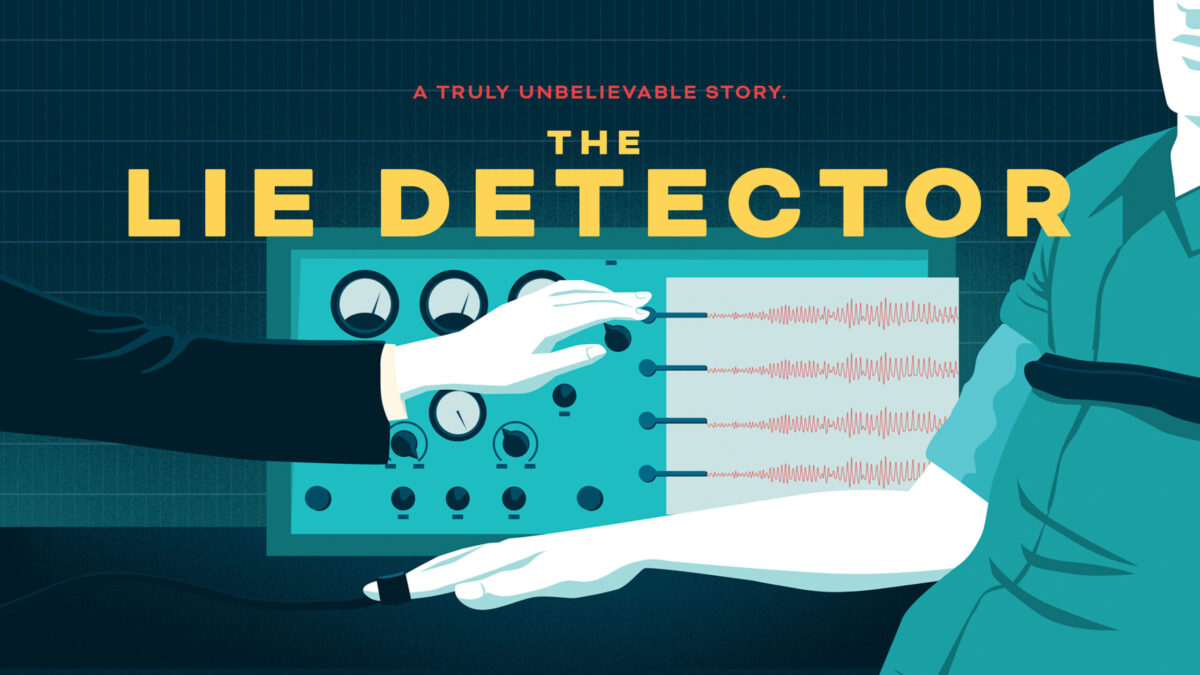
The idea that a machine can tell whether you’re lying sounds like something pulled from a crime show. Someone sits in a quiet room, wires attached, a steady voice asking uncomfortable questions. A chart scribbles lines across paper—or a screen these days—and somehow, truth is supposed to reveal itself.
But here’s the thing: the polygraph test didn’t appear out of nowhere. It’s the result of decades—actually centuries—of people trying to answer one stubborn question: can we measure honesty?
Let’s walk through how we got here, because the story is stranger, more human, and a lot less certain than most people think.
Before Machines: The Old Ways of Detecting Lies
Long before wires and sensors, people still needed ways to decide who was telling the truth. And honestly, some of those methods were… questionable.
In ancient India, a suspect might be asked to chew dry rice and spit it out. If it came out dry, that was seen as a sign of guilt—because fear reduces saliva. In medieval Europe, trials by ordeal were common. Think of holding a hot iron or being thrown into water. Survive, and you’re innocent. Don’t, and… well.
It sounds brutal now, but even then, there was a rough intuition at work: stress affects the body. Fear changes how we behave physically. People didn’t have science to explain it yet, but they could see something was happening beneath the surface.
That basic idea—your body reacts when you lie—never really went away. It just evolved.
The First Scientific Steps
Fast forward to the late 1800s and early 1900s. Psychology and physiology were starting to take shape as serious fields. Researchers began looking at measurable signs of stress: heart rate, blood pressure, and breathing.
One early figure, Cesare Lombroso, experimented with using a device to measure blood pressure during questioning. It wasn’t exactly a lie detector yet, but it was a step toward connecting physiological changes with deception.
Then came William Marston in the early 20th century. He’s often credited with developing an early version of the polygraph using systolic blood pressure. Interestingly, he later went on to create Wonder Woman—and yes, her “Lasso of Truth” was partly inspired by his work on lie detection. Real life bleeding into fiction.
Still, these early tools were rough. They captured one signal at a time, and human behavior isn’t that simple.
The Birth of the Polygraph
The modern polygraph test started to take shape in the 1920s. John Augustus Larson, a police officer and medical student, developed a device that could simultaneously measure multiple physiological responses—heart rate, respiration, and blood pressure.
That was a big leap. Instead of relying on a single clue, the machine tracked several indicators at once. More data meant a better shot at spotting patterns.
Leonarde Keeler, Larson’s colleague, later refined the device further, making it more portable and practical for law enforcement use. By the 1930s and 1940s, polygraphs were becoming more widely used in criminal investigations.
Here’s where things start to feel familiar. The setup most people picture today—an examiner asking structured questions while monitoring physical responses—was largely established during this period.
But even then, there was debate. Some saw it as a breakthrough. Others weren’t convinced.
How It Actually Works
Let’s clear up a common misconception: a polygraph doesn’t detect lies. It detects physiological changes.
When you’re hooked up to a polygraph, sensors track things like your breathing pattern, heart rate, blood pressure, and skin conductivity (which changes with sweating). The idea is simple: when people lie, they may feel stress or anxiety, and that triggers measurable reactions.
Now imagine a scenario. You’re asked, “Did you take the missing cash?” Even if you didn’t, the accusation alone might make your heart race. Your palms might sweat. Your breathing might shift.
That’s the core problem. The machine can’t tell why your body is reacting—only that it is.
To deal with this, examiners use structured questioning techniques. They compare responses to “control” questions (like general behavior questions) with responses to relevant ones. The hope is that deceptive answers produce stronger reactions.
Sometimes it works. Sometimes it doesn’t.
The Rise in Popularity
By the mid-20th century, polygraph tests were being used in all sorts of settings. Police departments adopted them. Government agencies used them for security screenings. Even private companies occasionally turned to polygraphs for employee investigations.
During the Cold War, their use expanded even more, especially in intelligence and national security contexts. The idea of catching a spy with a machine had obvious appeal.
And culturally, the polygraph became a symbol. Movies and TV shows loved it. The tension of a character sweating under questioning while a machine ticks away—it’s hard to beat that kind of drama.
But real life isn’t scripted. And that’s where things get complicated.
The Accuracy Debate
Let’s be honest—this is where opinions split.
Supporters argue that polygraph tests can be useful when administered properly by trained examiners. They point to cases where confessions followed a test or where results aligned with other evidence.
Critics, though, raise a serious concern: there’s no consistent scientific proof that polygraphs can reliably detect deception.
Studies have shown mixed results. Some suggest accuracy rates better than chance, but far from perfect. Others highlight how easily results can be influenced by anxiety, personality, or even the examiner’s expectations.
Picture someone who’s naturally nervous. Maybe they’re being questioned about something they didn’t do, but the pressure alone causes strong reactions. On the flip side, someone calm—or trained to control their responses—might slip through.
That gap between reaction and truth is the core weakness.
Legal and Ethical Questions
Because of those concerns, polygraph results are often not admissible in court. In many places, judges don’t allow them as evidence, or only do so under strict conditions.
There’s also the issue of fairness. Should someone’s job depend on a test that isn’t fully reliable? Should a nervous but innocent person risk failing?
In the United States, for example, the Employee Polygraph Protection Act limits the use of polygraph tests in the private sector. Most employers can’t require them.
Still, government agencies and certain security roles continue to use them, especially where sensitive information is involved.
Modern Polygraphs and New Technology
Today’s polygraph machines are more advanced than their early counterparts. Digital systems have replaced paper charts. Data analysis is more sophisticated. Examiners receive more standardized training.
But the core principle hasn’t changed. We’re still measuring physical responses and trying to interpret them.
At the same time, new technologies are emerging. Brain imaging, voice stress analysis, and AI-driven behavioral tools have all been explored as alternatives or supplements.
Some researchers are looking at fMRI scans to detect patterns of brain activity associated with deception. Others are experimenting with subtle vocal cues or facial micro-expressions.
It sounds promising, but most of these methods are still experimental. None has fully replaced the polygraph.
The Human Factor
Here’s something that doesn’t get talked about enough: the person running the test matters—a lot.
A skilled examiner knows how to build rapport, phrase questions carefully, and interpret results in context. A poor one can skew the entire process.
Think about it like this. Two people take the same test with two different examiners. One feels calm and understood. The other feels pressured and suspicious. Their physiological responses might look very different, even if both are telling the truth.
That human element makes the polygraph less like a machine and more like a tool—one that depends heavily on who’s using it.
Why Polygraphs Still Exist
Given all the controversy, you might wonder why polygraph tests are still around.
Part of the answer is psychological. The test itself can encourage people to tell the truth—or at least, to confess. Sitting in that chair, connected to a machine, can feel intimidating. Some people crack under that pressure.
There’s also institutional inertia. Systems that have used polygraphs for decades don’t change overnight, especially when no clear replacement exists.
And in certain contexts, even imperfect tools are seen as better than nothing.
A Reality Check
If you’re imagining a polygraph as a truth machine, it’s worth adjusting that view.
It’s better to think of it as a conversation supported by physiological data. Sometimes it helps clarify things. Sometimes it muddies the waters.
If someone tells you they “passed” a polygraph, that doesn’t necessarily prove innocence. If they “failed,” it doesn’t automatically mean guilt.
The results live in a gray area—and they always have.
Where It Stands Today
Polygraph tests sit in an interesting place. They’re not relics of the past, but they’re not fully trusted either.
Law enforcement still uses them in investigations. Intelligence agencies rely on them for screening. But courts remain cautious, and scientists continue to debate their validity.
Meanwhile, the search for a more reliable way to detect deception goes on.
The Takeaway
The history of the polygraph test is really a story about our desire for certainty. We want a clear signal—something that cuts through doubt and tells us who’s telling the truth.
But human behavior doesn’t cooperate that easily.
From ancient rice tests to modern digital sensors, the tools have changed, but the challenge remains. We’re still trying to read something complex using imperfect signals.
And maybe that’s the honest answer: the polygraph isn’t a magic truth detector. It’s a reflection of our ongoing attempt to understand ourselves—stress, fear, honesty, and all the messy things in between.