Essential Food Prep Tools for a More Efficient Restaurant Kitchen
Speed, consistency, and organization are the keys to a restaurant kitchen. Even before a dish gets to the pass, it relies on the quality and consistency of the equipment available to chop, measure, mix, and store ingredients. When a food operator is preparing to invest in equipment and supplies, one of the most sensible ways to save on labor time, waste, and to maintain good service during a rush is to invest in the right food prep supplies. The guide explains the essential tools for any commercial kitchen and what to consider in the process of getting them from a Standard Restaurant Supply Store.
Why the Right Food Prep Supplies Matter
The pace of all things that follow is set during the prepping process. Small delays begin to accumulate when knives are dull, containers aren’t fitting the shelves, or scales are not reliable. Those delays add up during a shift and result in faster ticket times and inconsistent platting. Food Prep Supplies that are durable and well-designed take the strain out of the kitchen, help to reduce the risk of cross-contamination, and help ease the training of new employees to uniform procedures. The equipment employed prior to cooking is as important as the actual cooking equipment in any kitchen looking to increase production without sacrificing quality.
Core Cutting and Chopping Tools
Tasks cut have the biggest impact on speed and safety, and make up a significant portion of daily prep.
Chef’s Knives and Knife Sets
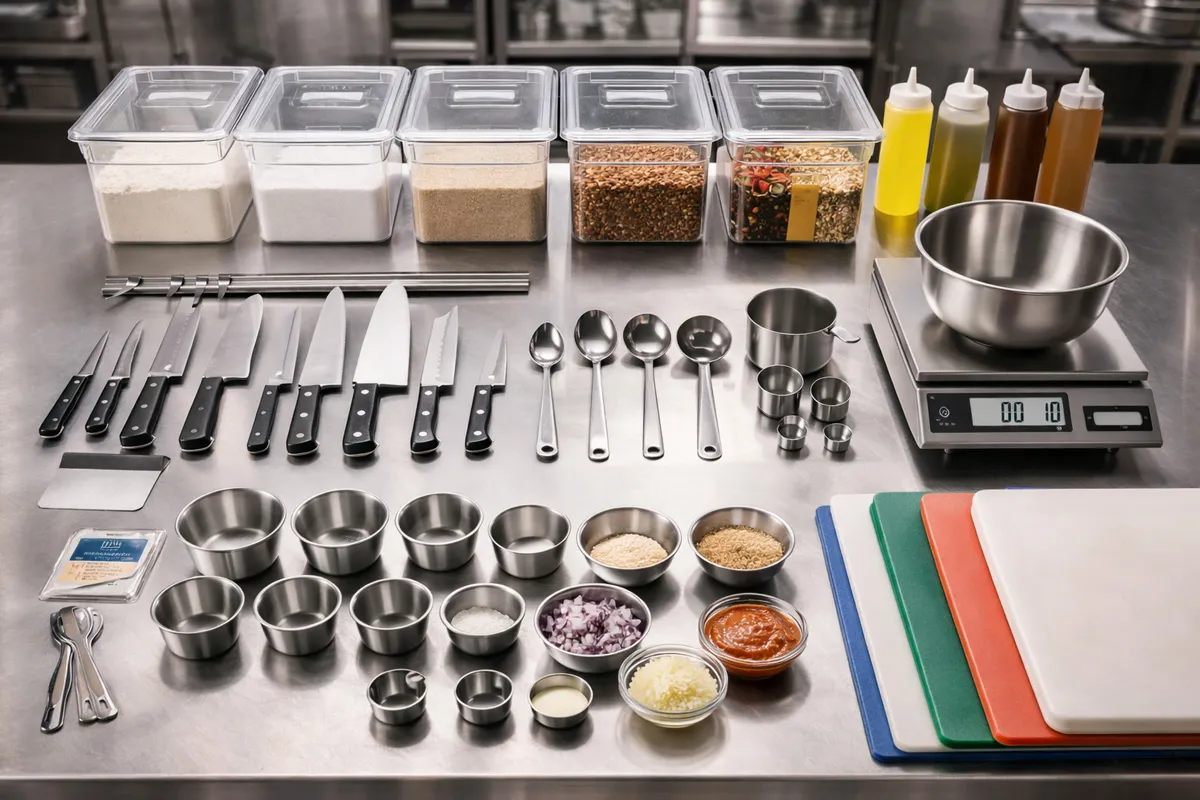
In addition to the all-purpose chef’s knife, a full set should include a paring knife for detail work, a serrated knife for bread and delicate produce, and a boning knife for butchery work. Slip-resistant, ergonomic handles will help prevent accidents and fatigue for long hours of preparation.
Cutting Boards Built for Volume
Several cutting boards are required in commercial kitchens because it is not only convenient, it’s a food safety requirement. Color-coded boards are used to distinguish raw proteins, produce, and ready-to-eat foods to minimise the risk of cross-contamination.
Measuring and Portioning Equipment
Predictability of food costs and reliability of customer experiences begin with consistent measurement devices.
Digital Scales
Digital scales can ensure kitchens portion ingredients accurately – directly impacting the cost of the plate and consistency of the recipe. Consider models that have a splash-resistant casing to accommodate a hectic prep station and a large weighing capacity, along with a tare function.
Portion Scoops and Ladles
Staff can use colour-coded numbered scoops and ladles to ensure that they are able to serve the same amount of food by sight rather than having to weigh each item. This can make a huge difference in speed of service and allows managers to monitor the food cost more closely because portion sizes remain consistent throughout the day and from employee to employee.
Mixing and Prep Containers
After cutting and measuring ingredients, they must be efficiently mixed, retained, and stored.
Stackable Mixing Bowls
A stainless steel, graduated mixing bowl is a must-have at a prep station. Stainless steel also will not stain or absorb odors like plastic, and stackable designs are great for saving space on the shelf or counter, especially if you’re using a bowl for various foods all day long.
Food Storage Containers
Airtight, clear, and stackable containers make it easy to see what is inside at a glance and make inventory checking quick and easy, minimizing loss and spoilage. Containers that have easy-to-clean, secure lids are used to ensure food safety and ease the FIFO (first in, first out) rotation practices that most health inspectors inspect during their visits.
Where to Source Reliable Food Prep Supplies
Choosing a source is as important as selecting the tools. Purchasing from a restaurant supply company instead of a general restaurant supply store generally translates into commercial-grade materials that are intended to be used on a daily basis, superior warranty and replacement part support, and a number of other benefits.
What to Look for in a Standard Restaurant Supply Store
It is important that a Standard Restaurant Supply Store can provide NSF-certified equipment, as it guarantees the items are up to public health and safety standards that are mandated in most jurisdictions. Find a supplier that offers a wide selection of cutting tools, storage solutions, measuring instruments, and small appliances; this way, all replenishment and upgrades will be accomplished through one supplier. Good suppliers will also give you the specifications of the product you are ordering, customer service to assist you when needed, and a reasonable turnaround on bulk orders, which can be a major consideration if equipment needs to be replaced quickly during a busy season.
Organizing Your Prep Station for Efficiency
Originally published in Modern Contractor, July 2018, this article was adapted. This article was originally published in Modern Contractor, July 2018. Organising cutting tools, containers, and measuring equipment by job makes staff less likely to wander around the kitchen during the course of a job. Labeled zones for raw versus ready-to-eat prep, mounted knife racks, and designated zones for raw versus ready-to-eat prep all limit unnecessary movement and reduce the risk of contamination. A well-organized station will also allow for easier detection of missing or damaged tools before service slowdown can result.
Conclusion
A good restaurant recipe is only part of the equation of an efficient restaurant kitchen. By using the trusted Standard Restaurant Supply Store to get these pieces of equipment, kitchen teams can have the peace of mind that comes with knowing the equipment will last, meet health standards, and be dependable during stressful events.
FAQ
What are the most important food prep supplies for a new restaurant kitchen?
The basic list of items is a commercial knife set, color-coded cutting boards, digital scales, stainless steel mixing bowls, and airtight containers for storage. These include the basic preparation activities that are undertaken in every kitchen every day.
Why is NSF certification important when buying kitchen equipment?
NSF certification verifies that equipment has been tested and is safe for the public to use with regard to food safety and sanitation. Certified equipment is needed to help health departments pass inspections.
What should I look for in a Standard Restaurant Supply Store?
Seek out a diverse array of products, NSF-certified products, precise specifications, predictable delivery dates, and customer service that is available for bulk and repeat orders.
How can better food prep tools reduce labor costs?
Effective and maintained equipment reduces staff time devoted to cutting, measuring, and portioning activities. Increased speed and uniformity of preparation reduces overtime requirements and permits kitchen operations to increase in volume without increasing the number of employees.