
Outsourced Link Building for E-commerce Costs, Risks, and What to Measure
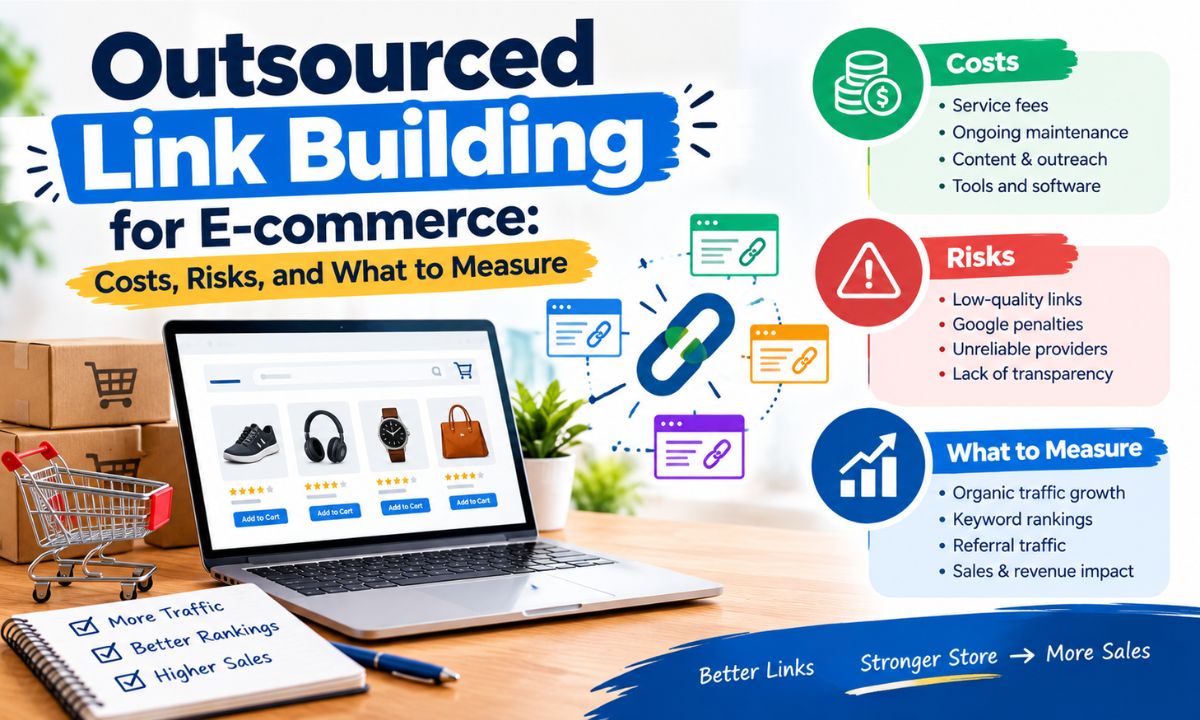
For an online business, visibility is part of the sales process. A customer needs to find your product or service before they can compare it, trust it, or buy it. Search engine optimisation can help, but building useful links to your website takes time and careful judgement. Outsourcing may give a small team extra capacity, provided the work is treated as a long-term investment rather than a quick ranking fix.
Link building means earning links from other websites to pages on your own site. Search engines may use these links as one signal when assessing a page, but not every link is valuable. Relevance, editorial context, and the quality of the linking site matter more than a large tally. Here is how to assess the option, manage its costs, and reduce common risks.
What Does Outsourced Link Building Involve?
An outside provider may help with research, prospecting, outreach, content coordination, and reporting. The exact scope varies: one provider might focus on finding relevant publishers, while another may also prepare article ideas or draft material for review. Before comparing prices, ask what work is included and what your own team will need to supply.
A good process starts with your business goals. An online retailer might want to make a useful buying guide easier to discover; a finance firm may want to build awareness of an educational resource. In either case, links should support pages that are genuinely helpful to readers. They are not a substitute for sound products, accurate information, or a website that converts visitors.
When Does Outsourcing Make Sense?
External support can suit a business that has a clear SEO strategy but lacks the staff hours or specialist experience to carry out outreach consistently. It may also help a marketing team test a new channel without immediately hiring a full-time employee.
It is less suitable when the business has no clear target audience, no useful pages to promote, or no capacity to review the work. If nobody can assess whether a proposed website is relevant and trustworthy, outsourcing simply moves the decision elsewhere. Keep a knowledgeable person inside the business responsible for approval.
How to Compare Providers and Costs
Pricing can be structured as a monthly retainer, a project fee, or a per-placement charge. The lowest headline price may not reflect the real value: check whether research, content, revisions, and reporting are included, and whether there are extra costs for design or specialist writing.
Ask prospective providers to explain their approach in plain language. A credible supplier should be able to describe how it identifies suitable websites, checks relevance, and handles editorial standards. Be wary of guaranteed rankings, unusually high volumes at very low prices, or vague claims about access to private networks. Search results are affected by many factors, so a provider cannot responsibly promise a specific position.
Before signing, agree on the deliverables, review points, timeline, and cancellation terms. For a small business, a limited pilot can help establish whether communication and quality meet expectations before committing a larger share of the marketing budget.
Quality Checks That Protect Your Brand
Links should make sense to the people who encounter them. A mention on a relevant industry resource may bring qualified readers as well as search visibility; a link on an unrelated or thin page is unlikely to help your reputation. Review the actual page, not just a spreadsheet of domain metrics.
- Check relevance: Does the site cover a subject connected to your audience or expertise?
- Review the page: Is the content useful, readable, and maintained, or does it exist mainly to host links?
- Confirm editorial control: Can you review proposed topics and placements before publication?
- Keep records: Save URLs, publication dates, costs, and any agreed follow-up work.
Do not approve content that makes unsupported claims about your business, particularly in finance or other regulated areas. Your team should check facts, brand tone, and any applicable disclosure requirements. A link is not worth a loss of customer trust.
Where Freelancers Fit In
Not every business needs a single specialist agency. Some teams may source separate help for research, writing, design, or outreach, as long as someone coordinates the work and owns quality control. Freelance marketplaces can be one way to find that support. For example, Osdire connects buyers and freelancers across more than 900 categories, including marketing, writing and translation, and graphics and design. Its flat pricing, lack of hidden fees, and payment held securely until delivered work is approved may be useful considerations when comparing freelance arrangements. As with any hiring route, check each freelancer’s relevant experience and agree on the scope before work begins.
Measuring Results Without Chasing Vanity Metrics
Track more than the number of links delivered. Useful measures can include referral visits, engagement with the page being promoted, enquiries or sales where relevant, and changes in organic visibility over time. Results may take months to become clear, and it can be difficult to attribute a change in traffic to one activity alone.
Set a baseline before a campaign starts, then review results at sensible intervals. Compare the cost with the business outcome you care about, not just a provider’s preferred score. If the links are technically delivered but do not reach relevant readers or support your wider strategy, reconsider the plan.
Making the Decision
Outsourcing link building can be a practical way to add capacity, but the business remains accountable for the work published in its name. Choose a provider or freelancers who explain their methods, accept reasonable review, and focus on relevant editorial placements. Start with clear goals, a defined budget, and useful pages worth recommending.
When those pieces are in place, an outsourced link building service can be assessed as one part of a broader marketing plan. If a proposal depends on shortcuts, guaranteed rankings, or volume without context, pause before spending. A measured approach protects both your budget and the credibility your business has worked to build.