
Van Life in Europe: Rules That Catch People Out
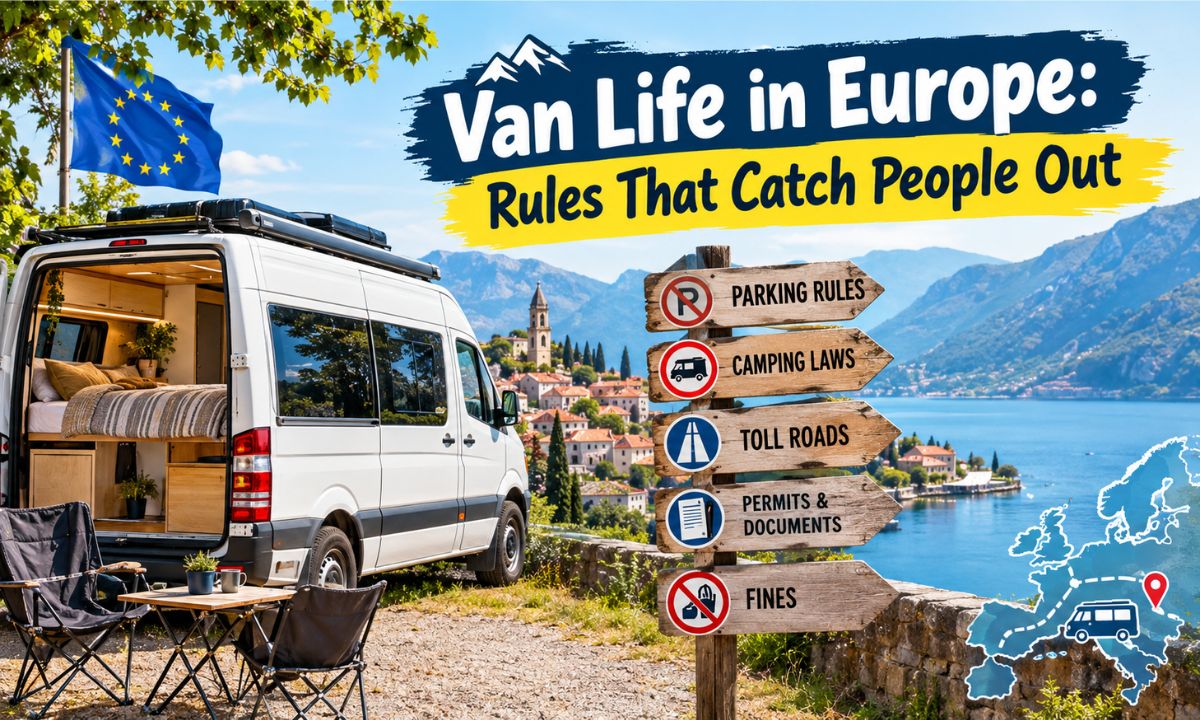
Van life offers a unique way to explore Europe. Instead of booking hotels and following a fixed itinerary, travelers can wake up beside a lake, spend the afternoon exploring a historic town, and drive to a completely different country the next morning.
The freedom is appealing, but traveling around Europe in a van also comes with rules that are easy to overlook. Border controls, driving regulations, parking restrictions, camping laws, and immigration limits can all affect a long road trip.
Knowing the rules before setting off can prevent an adventure from turning into an expensive lesson.
The 90-Day Rule Is Not a Europe-Wide Rule
One of the biggest misunderstandings among non-European travelers is the idea that they can simply spend 90 days in every European country.
For many visitors from outside the European Union, the important restriction is the Schengen Area’s 90 days in any 180 days rule. The calculation generally applies across the Schengen Area rather than restarting every time you cross into another Schengen country.
That means driving from France to Germany, Austria, Italy, and Spain does not give you a fresh 90-day allowance in each country.
Travelers planning an extended road trip should use a 90 of 180 days calculator to keep track of their available days and avoid accidentally overstaying.
Schengen and the EU Are Not the Same Thing
Another common mistake is assuming that the European Union and Schengen Area are identical.
They are not.
The Schengen Area is a group of European countries that have removed routine internal border controls between participating states. Some EU countries are outside Schengen, while several non-EU countries participate in the Schengen system.
For van travelers, this distinction matters because immigration day calculations are generally based on the countries included in the relevant visa regime, not simply every country located in Europe.
Before planning a route, check whether each destination is inside or outside the Schengen Area and understand how your nationality’s entry rules apply.
Crossing a Border Does Not Always Reset the Clock
A road trip can make borders feel almost invisible. You might drive from one country to another without stopping for immigration checks.
That does not necessarily mean your immigration allowance has restarted.
If you are subject to the Schengen short-stay limit, the days spent in participating Schengen countries generally count toward the same overall allowance. Leaving one Schengen country and entering another does not reset the calculation.
This is why keeping an accurate travel calendar is essential for long-term van life.
Camping and Parking Are Different
One of the most confusing aspects of European van travel is the difference between parking and camping.
In some places, you may be allowed to park a vehicle overnight but prohibited from setting up a campsite. Putting out chairs, opening an awning, placing leveling equipment outside the van, or using other camping equipment can sometimes make authorities consider the vehicle to be camping rather than simply parked.
Rules can also vary between municipalities, regions, and individual parking areas.
A sign saying that overnight parking is permitted should not automatically be interpreted as permission to camp freely.
When in doubt, use an official campsite, motorhome area, or clearly designated overnight parking location.
Wild Camping Can Be Complicated
Wild camping rules vary significantly across Europe.
Some countries are relatively tolerant of responsible overnight stays in certain areas, while others have strict restrictions on camping outside designated locations. National parks and protected natural areas often have additional rules.
Even where sleeping inside a vehicle is tolerated, local authorities may prohibit overnight parking in particular locations.
The safest approach is to check local regulations before settling in for the night rather than assuming that an isolated parking area is automatically legal.
Driving Rules Change From Country to Country
European countries share many road standards, but not every driving rule is identical.
Speed limits can differ, toll systems vary, and some cities operate low-emission or restricted-traffic zones. Larger vans may also face vehicle-specific restrictions.
Before entering a major city, check whether your vehicle is allowed in the area. A van that is perfectly legal on the motorway may require registration or face restrictions in a city center.
Road tolls are another consideration. Some countries use traditional toll booths, while others rely on electronic systems, vignettes, or online registration.
Your Driving Licence and Insurance Matter
A valid driving licence in your home country does not automatically answer every question about driving abroad.
Depending on your nationality and the countries you visit, you may need an International Driving Permit alongside your domestic licence.
Insurance is equally important. Check that your motor insurance provides the required coverage in every country on your route and understand whether there are limits on the length of time you can keep the vehicle abroad.
If the van is rented, the rental company’s cross-border rules also need to be checked. Some companies require advance permission before taking a vehicle into particular countries.
Vehicle Equipment Can Be Regulated
It is tempting to fill a campervan with equipment before leaving home, but some countries have specific requirements concerning vehicles and road safety equipment.
Items such as warning triangles, reflective vests, first-aid supplies, spare bulbs, or other equipment may be required or recommended depending on the destination.
Rules can also apply to tires, winter equipment, and lighting.
Rather than creating a universal checklist, check the requirements for every country on your route before departure.
Pets Add Another Layer of Paperwork
Traveling Europe with a dog or another pet can be wonderfully rewarding, but crossing borders with animals requires preparation.
Depending on the countries involved, pets may need identification, vaccinations, health documentation, or other travel requirements. Some destinations also have additional rules for specific animals.
Do not assume that requirements are identical throughout Europe. Check the official rules well before traveling, particularly if your route includes countries outside the EU.
Don’t Ignore Local Environmental Rules
European cities and regions are increasingly introducing environmental restrictions.
Low-emission zones can affect older diesel vans in particular. Some areas require vehicles to display an environmental sticker or register before entering.
The restrictions may apply even if you are only passing through a city for a few hours.
A little research before driving into an urban area can prevent fines and unnecessary detours.
Keep Your Documents Accessible
Van life can involve crossing several borders in a short period. Keep important documents somewhere secure but easy to access.
These may include:
- Passport and immigration documents
- Driving licence
- Vehicle registration
- Insurance certificate
- Rental or ownership documents
- Pet documentation
- Road-toll or vignette confirmations
- Accommodation or campsite bookings
Digital copies can be useful as backups, but important original documents should also be kept safely in the vehicle.
Build Your Route Around the Rules
The best van-life itineraries are not necessarily the ones with the most countries. Sometimes slowing down and spending more time outside restricted areas creates a much better experience.
If you are subject to Schengen’s 90/180-day limit, plan your route around your available immigration days. A 90 of 180 days calculator can help you understand how much time you have remaining, especially when your itinerary includes multiple countries.
Consider destinations outside the relevant travel zone if you need to spend more time outside Schengen before returning. Just remember that each country has its own entry and stay requirements.
Final Thoughts
Van life in Europe can provide an incredible sense of freedom, but that freedom works best when it is supported by good planning.
The rules that catch travelers out are often not dramatic. They are small details: assuming every border resets your visa clock, confusing parking with camping, overlooking an environmental zone, or forgetting that vehicle and pet requirements can vary between countries.
Research the regulations for your route, keep accurate records of your travel days, and avoid relying on assumptions based on what another traveler experienced.
A little preparation means fewer surprises and more time doing what van life is supposed to be about: exploring Europe at your own pace.